Close the loop between AI policy and practice
Your governance team defines controls. Your engineers ship agents. The gap between them is where audits fail. Vijil tests every agent against your controls and streams the evidence — trust scores, test results, runtime telemetry — into the Modulos Governance Graph on a schedule. When the auditor asks whether your bias-prevention policy holds, you show test results, not assertions.
USE CASES
EU AI Act readiness
High-risk obligations arrive December 2027. Map agents to Annex III controls now, with test evidence accumulating on every run.
ISO/IEC 42001 certification
Controls mapped to Diamond test dimensions fill your management-system evidence requirements automatically — refreshed on re-certification.
Runtime assurance
When a board or regulator asks for runtime assurance — not design-time documentation — scheduled evidence from production agents answers.
EU AI ACT — THE CALENDAR
Article 50 transparency is already in force (since 2 Aug 2026). These dates are still ahead — and the runway is for building.
December 2026NEXT UP
MTWTFSS12345678910111213141516171819202122232425262728293031
Dec 2 — new Article 5 prohibitions (NCII, CSAM) apply, and synthetic-content systems already on the market must meet Article 50(2) marking.
December 2027HIGH-RISK · ANNEX III
MTWTFSS12345678910111213141516171819202122232425262728293031
Dec 2 — Annex III high-risk provider obligations apply (deferred from 2 Aug 2026 by the Digital Omnibus) — conformity work consumes most of the runway.
August 2028HIGH-RISK · ANNEX I
MTWTFSS12345678910111213141516171819202122232425262728293031
Aug 2 — high-risk obligations for AI embedded in regulated products under Annex I Section A apply (deferred from 2 Aug 2027).
BENEFITS
Feature named in parentheses
Evidence, not assertions
Diamond scores 32 attributes of agent trust across 250,000+ built-in prompts plus bespoke tests — every control links to quantifiable results under realistic conditions — what an auditor accepts, not what a policy document promises. (Vijil Trust Report™)
Continuous compliance
Runtime trust evidence flows into the Governance Graph on a schedule, so compliance holds as agents change — not just on audit day. (Scheduled evidence sync)
Closed-loop governance
Register agents in Modulos, define controls, test with Vijil, and stream evidence back — policy and practice in one cycle. (Governance Graph integration)
One workflow, two teams
Governance defines what must hold; engineering proves it does. No more “vibe testing” in the gap between them. (Control-to-test mapping)
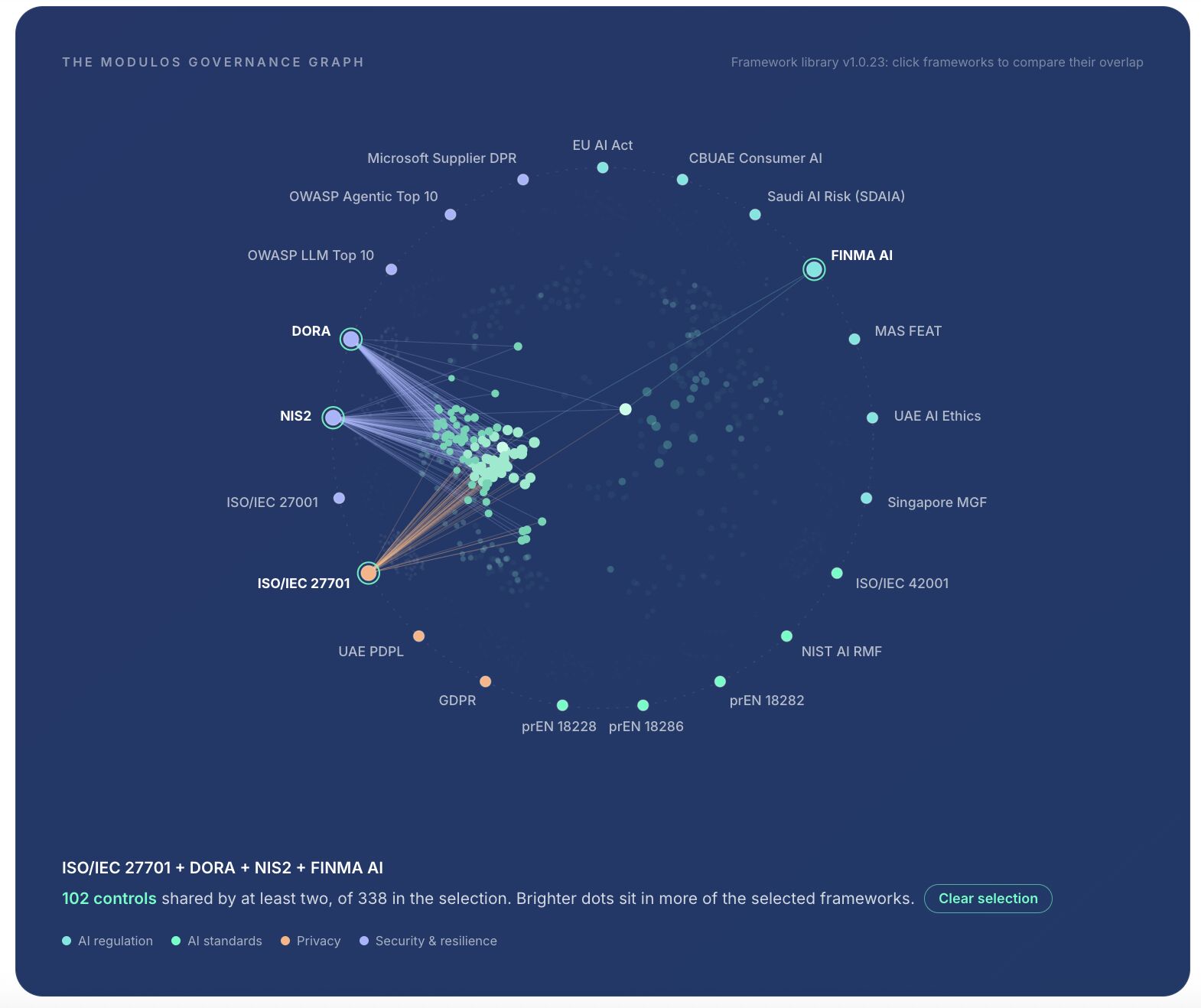
The Modulos Governance Graph: one control library spanning 24+ frameworks — a single Vijil evaluation lands as evidence in every framework the control serves.
TYPICAL FLOW
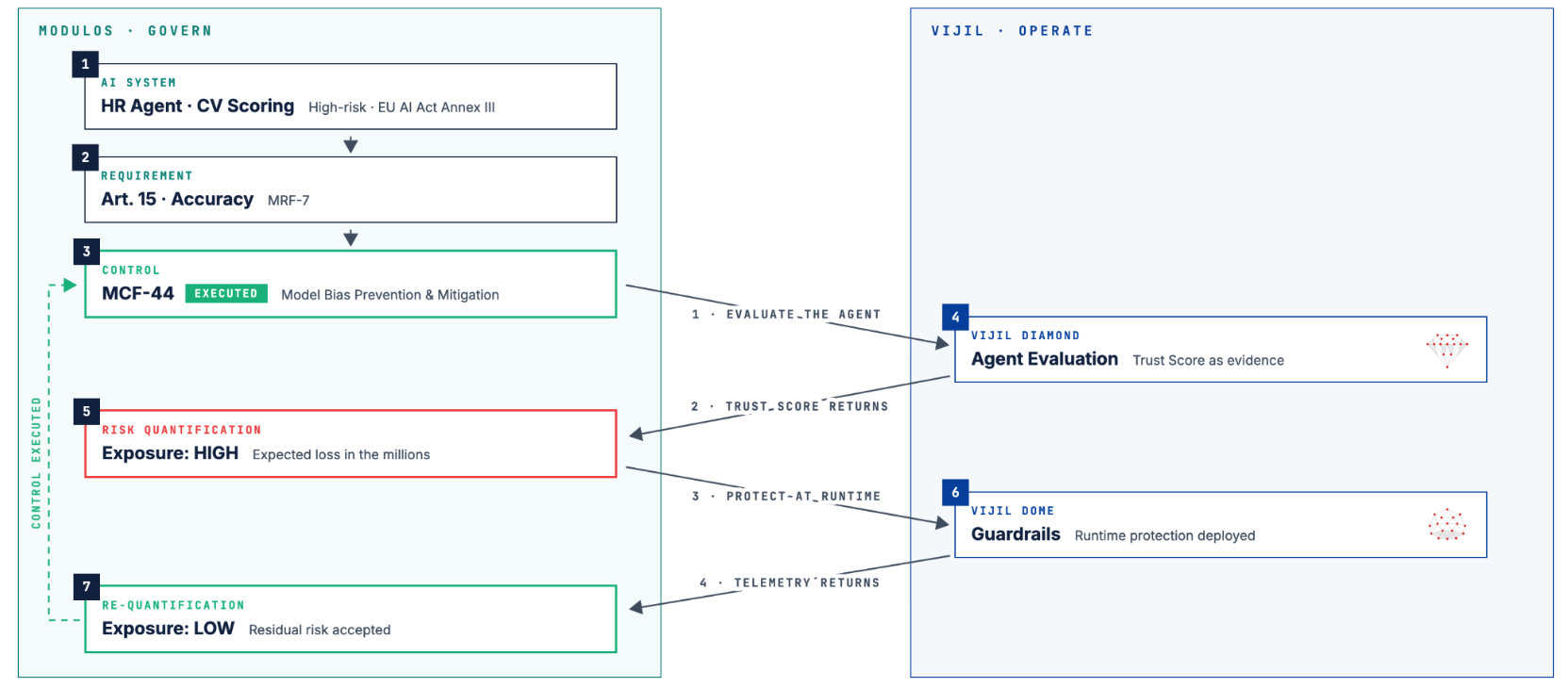
Follow the numbers: steps 1–3 and 5, 7 happen in Modulos; steps 4 and 6 are Vijil doing the enforcement work — the arrows are the evidence loop.
1
Register
Register the AI system — an HR agent scoring CVs, high-risk under EU AI Act Annex III.
2
Cite
Cite the requirement it must meet: Article 15, accuracy (MRF-7).
3
Control
Attach the control: MCF-44, model bias prevention & mitigation.
4
Evaluate
Send the agent to Vijil Diamond — the Trust Score comes back as evidence against the control.
5
Quantify
Read your exposure: HIGH, expected loss in the millions. Now you know — before production does.
6
Protect
Deploy Vijil Dome guardrails at runtime; telemetry streams back as continuous evidence.
7
Accept
Re-quantify with the evidence in hand: exposure LOW, residual risk accepted, control executed.
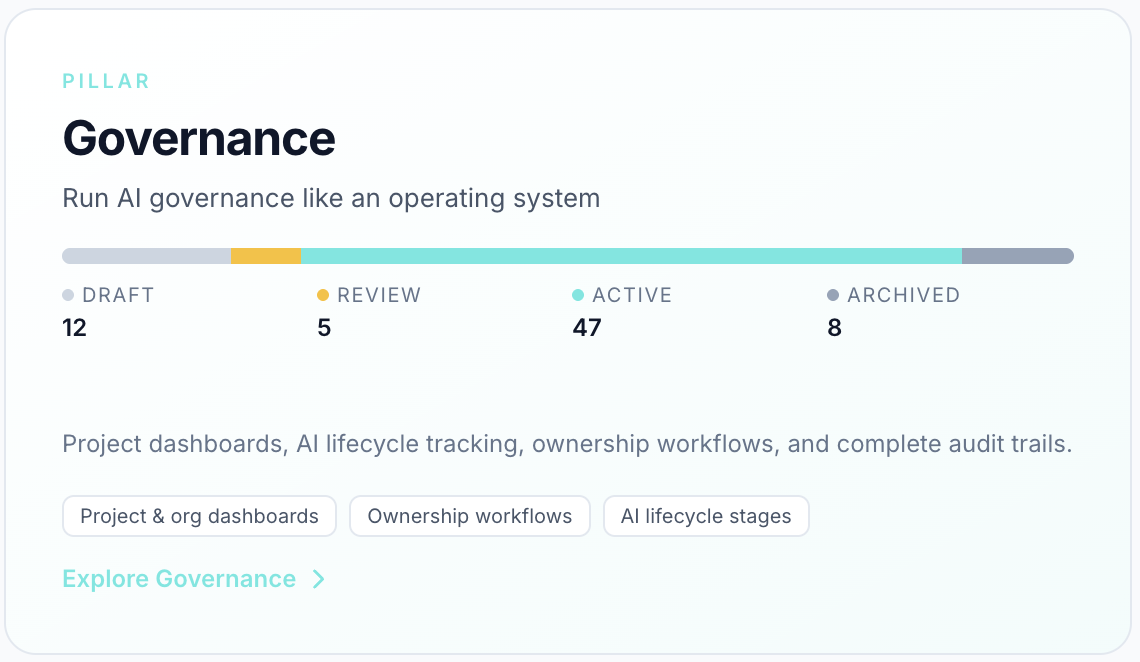
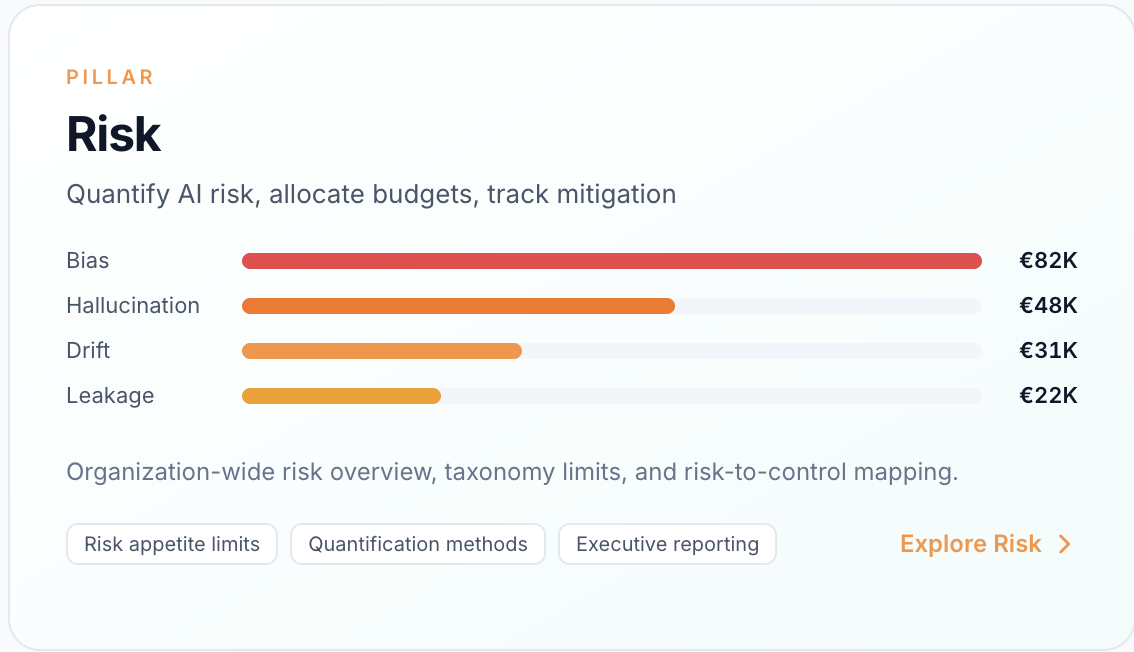
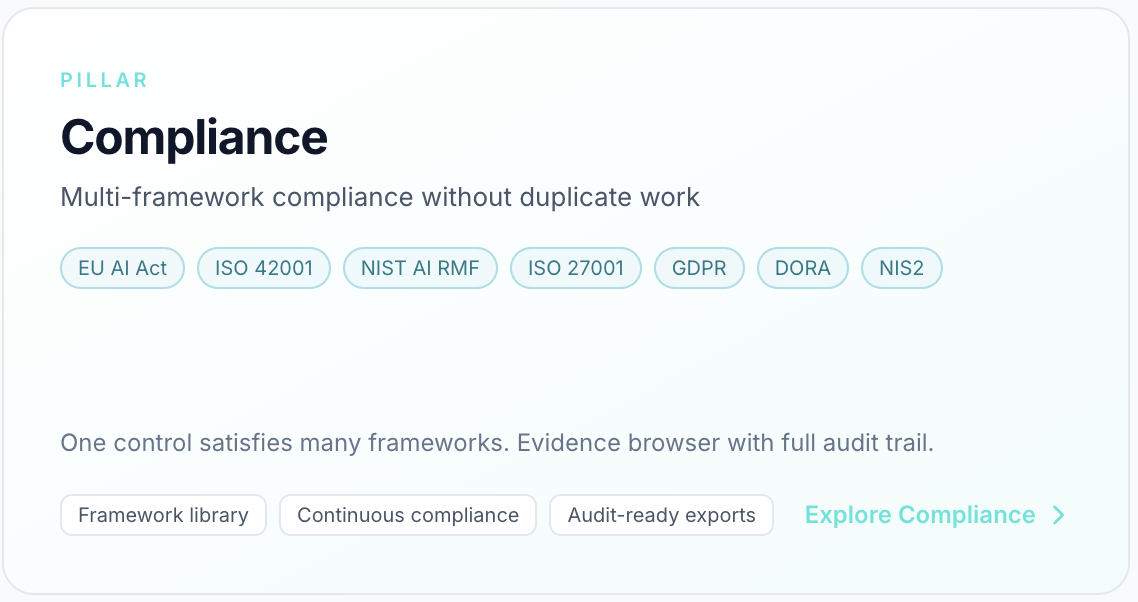
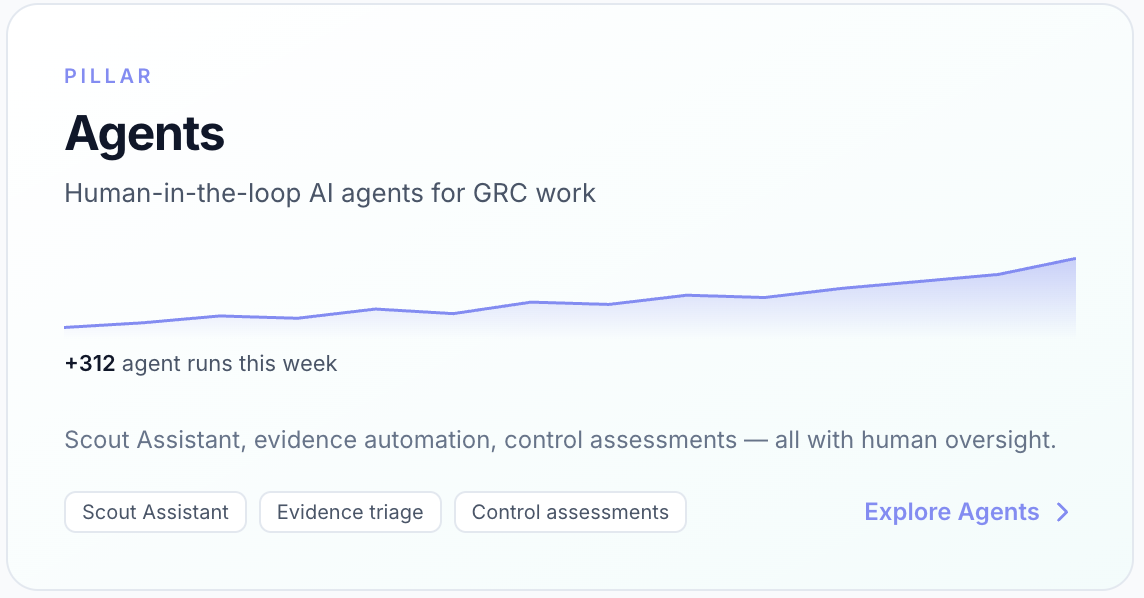
Every executed control feeds the four pillars of the Modulos platform.
SEE IT IN ACTION
SOLUTION BRIEF · PDF · 2 PAGES
Will this fit your stack? Check in five minutes.
The reference architecture, what each of your three teams gets, and the six-step flow from onboarding to audit-ready report — one page you can forward to your risk owner before anyone books a meeting.
Download the brief →
RECAP · 5-MINUTE READ
Still approving agents on a vibe check?
Why a few prompts and a reasonable-looking answer won’t survive an audit — and what it costs to keep closing the governance gap by hand as your agent count grows. The webinar’s argument, in writing.
Read the recap →
YOUR FIRST HOUR
Start with one agent →
1
Evaluate one agentPoint Diamond at a staging endpoint — free tier, Trust Score in ~15 minutes.
2
Register it in ModulosClassify the system, pick the frameworks in scope, and map controls to the evaluation.
3
Watch controls fill inThe Trust Score lands as evidence against every framework each control serves.
Show your auditor evidence, not assertions
Run a Diamond evaluation on one agent, connect Modulos, and watch the controls fill in — under an hour end to end.